Boat Seats in Florida Sun: Re-cover, Re-foam or Replace
Most boat seats fail in a predictable order, and knowing the order tells you what to fix.
October 20, 2026 · 4 min read
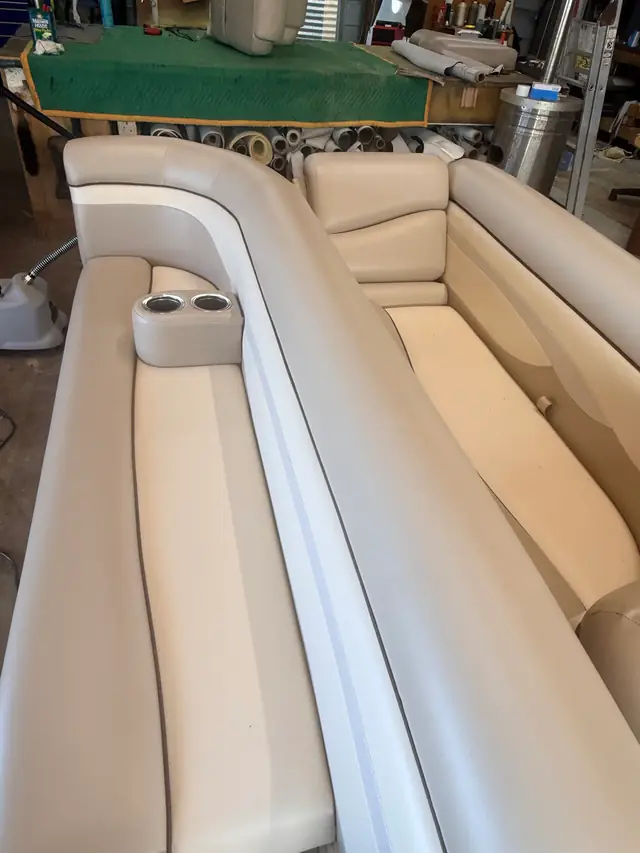
A boat seat has one of the toughest jobs in upholstery. It sits in direct sun for hours, takes spray and rain, gets stepped on, sat on wet and packed away damp, and it does all of that in Florida heat and humidity. Sooner or later every boat owner around Volusia County looks down at a cracked, sun-bleached cushion and wonders what to do about it. This guide explains how to tell whether your seats need a new cover, new foam or a full replacement.
What the sun does to marine vinyl
Marine vinyl is made to resist ultraviolet light and water, but nothing resists Florida sun forever. The first signs are a chalky or faded surface, then a stiff feel, then fine cracks along the folds and edges where the vinyl bends the most. Dark colors soak up heat and fade faster, while lighter colors stay cooler to sit on and show less fading. Once cracks open up, water gets through to the foam, and that's when a cosmetic problem turns into a structural one. If the vinyl is only faded and still supple, cleaning and protection may be all it needs. If it's brittle, cracking or peeling, a new cover is the right fix, and the sooner the better. Sunscreen, fuel and harsh cleaners can speed the damage, so rinse spills quickly and avoid anything abrasive. Also run your hand over the top of each cushion. The surface that gets the most direct light is usually the first to go, and it's often the only part that looks bad while the rest of the seat is still in decent shape.
Seams and stitching give out first
On most boats the seams fail before the vinyl does. Thread is exposed to the same sun and water as everything else, and a seam stitched with the wrong thread will rot even when the vinyl beside it looks fine. Look for stitching that's frayed, loose or missing in places, and for seams that gape open when someone sits down. A split seam lets water run straight into the cushion. Proper marine work uses UV-resistant thread and is sewn so the seam sits flat and tight. Piping, welting and corners take the most strain from people climbing in and out, so check those areas first. Snaps, zippers and other fasteners deserve a look too, since salt and moisture corrode metal parts and a cover that no longer closes properly will sag, flap or collect water along the edge.
Wet foam is the problem you can't see
Foam in a boat seat acts like a sponge once water gets inside. Wet foam grows mildew, smells sour, stays heavy and breaks down quickly. It also gives itself away if you know what to look for.
- The cushion stays damp or smells sour long after the boat has dried out.
- The seat feels flat or hard even though the vinyl looks good.
- Dark spots or mildew show through the seams or on the underside.
- The foam crumbles, or pieces stick to your hands when you press hard.
Putting a new cover over wet foam wastes the new cover, so a good shop checks the padding as soon as the old cover comes off. The foam should be dry, firm and springy before anything new goes over it. Replacing it at the same time as the cover is far better than doing the work twice. It also gives the seat its shape back. New foam cut to fit the seat base lets the cover sit smooth, without the wrinkles and sags that come from tired padding underneath.
Re-cover, re-foam or replace
Here's a simple way to sort it out. If the vinyl is worn but the foam is dry and firm, a re-cover is usually enough. If the foam is soaked, flat or crumbling, it needs renewing along with the cover. If the seat bases or backs are rotted, cracked or corroded around the hardware, the seat may need rebuilding or replacing, because new upholstery needs something solid underneath. Older boats, custom layouts and discontinued seating are often good candidates for re-covering, since a matching factory seat can be hard to find. We re-cover pontoon seating and other boat seats, and one customer wrote in a review that the quality was much better than he expected. He's planning to bring in an antique next.
Keeping new seats looking new
A little routine care adds seasons to a cover. These habits make the biggest difference.
- Rinse off salt, sunscreen and dirt with fresh water and mild soap.
- Prop cushions up after a wet day so air can reach the underside.
- Use a cover, or store the boat out of direct sun when you can.
- Open lockers and storage so damp air doesn't sit against the cushions.
Bring your boat seats, or a cushion and a few photos, to our showroom on International Speedway Blvd in DeLand and we'll tell you honestly what they need. If you'd like to talk it through first, call 386-734-1809 and ask for a free estimate. All of our workmanship is guaranteed.
Hunt's Upholstery & Interiors, 386-734-1809
Call 386-734-1809More articles
Re-cover or Replace: Is Your Chair or Sofa Frame Worth Saving?
The fabric is the easy part to change, so the real question is what's hiding underneath it.
Choosing Upholstery Fabric for a Florida Home
A fabric that looks perfect under shop lights has to survive afternoon sun, damp summers and your family.