Plantation Shutters, Blinds or Draperies for a Volusia County Home
Each type of window treatment solves light and privacy differently, and many rooms do best with two.
October 20, 2026 · 4 min read
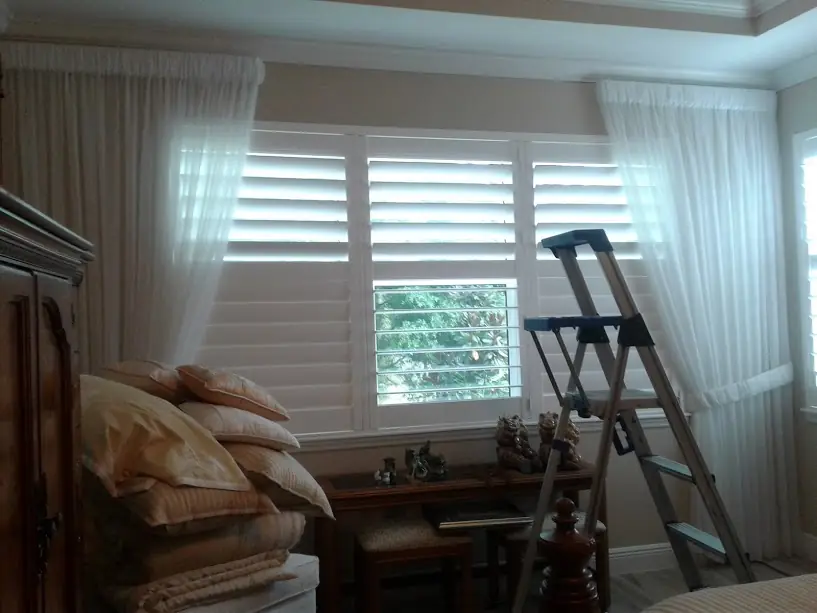
Window treatments do three jobs at once. They manage light, they give you privacy, and they finish a room in a way paint and furniture can't. In Volusia County the sun is strong and the afternoons are hot, so the choice matters more than it might in a cooler climate. Plantation shutters, blinds and draperies each solve the problem differently, and the right one depends on the window and the way you live. We've been providing window treatments in DeLand since 1964, and here's how we help people choose.
Plantation shutters: control and a clean look
Plantation shutters have wide louvers that tilt to aim the light where you want it. Closed, they give full privacy. Tilted, they let in daylight while keeping the street out of view. That makes them popular on front-facing windows and in bedrooms, and in rooms where you want light all day without being seen from the street. Closed against a hot window, a solid set of louvers also puts a firm barrier between the glass and the room. They sit in a frame, hold their shape, don't billow in a breeze and wipe clean with a cloth. There's no fabric to fade, which is a real point in their favor on a window that takes strong afternoon sun. They also give a room a tailored, architectural look. Keep in mind that shutters like these are a decorative window treatment, not storm protection.
Blinds: simple, adjustable and practical
Blinds suit windows where you want easy control and a slim profile. Horizontal blinds are a good fit for kitchens, offices and utility rooms, where you open and close them often. Vertical blinds handle sliding doors and wide openings, and they tilt to follow the sun across the day. Plantation-style blinds sit between the two, with the wider slats and look of shutters in a lighter and often more affordable format. Blinds don't give you the softness of fabric, but they're hard to beat for flexibility, and they're a sensible choice for windows you plan to dress with other treatments on top. Think about cleaning as well. Dust settles on slats, and a quick wipe every so often keeps them looking sharp, which is easier to commit to in a kitchen or a hallway than in a room with a dozen other chores waiting.
Draperies, valances and cornices: softness and height
Fabric does something hard treatments can't. It softens echoing rooms, frames the window and brings color and pattern to the walls. Draperies can be lined to block more sun and help protect the furniture beneath them from fading. Side panels frame a window without covering it. Valances and cornices finish the top, and a cornice, which is a shaped box covered in fabric, also hides the hardware. A trick we use often is to hang the rod higher and wider than the glass, which makes the window look larger and lets the panels clear the glass when open. Our window treatment materials are made in-house, and our showroom has sample books so you can see fabrics against your own colors before you commit. Lined fabric hangs better and blocks more light, while an unlined or sheer fabric glows when the sun comes through it. Neither is wrong. They suit different rooms, and a bedroom that needs darkness asks for something quite different from a sunroom you want filled with soft light.
Layering often beats choosing one
Many of the best rooms use two treatments. Plantation shutters with sheer side panels give you light control and privacy along with a softer edge. Blinds with drapery panels over a sliding door let you close the room down completely at night and filter the glare during the day. Layering also lets you change the room through the day without a full commitment to one look. If you're not sure which way to go, start with the function, whether that's privacy, sun control or style, and add a second layer for the other jobs. Layers also give you a way to adjust over the years. A shutter that does its job today can be joined by side panels later when you want the room to feel warmer, and nothing has to come down to make that change.
Questions to settle before you order
- Which direction the window faces and how much sun it gets in the afternoon.
- How much privacy you need from the street or the neighbors.
- Whether the opening is a standard window, a wide picture window or a sliding door.
- What the room is used for, and how often the treatment will be opened and closed.
- What furniture sits near the window and needs protection from fading.
Our window treatment work runs from the first conversation through installation, so you're dealing with one shop the whole way. Accurate measuring is the step that makes or breaks the result, because a treatment that's a little short or narrow is obvious every day, so it pays to have the opening measured carefully before anything is made. Stop by the showroom on International Speedway Blvd in DeLand to look at fabrics and sample books, or call 386-734-1809 to set up a free estimate. All of our workmanship is guaranteed.
Hunt's Upholstery & Interiors, 386-734-1809
Call 386-734-1809More articles
Re-cover or Replace: Is Your Chair or Sofa Frame Worth Saving?
The fabric is the easy part to change, so the real question is what's hiding underneath it.
Choosing Upholstery Fabric for a Florida Home
A fabric that looks perfect under shop lights has to survive afternoon sun, damp summers and your family.